What is a system?
A way of seeing the world. It is the collection of parts and functions that make up every process and interaction.
The bicycle crank arms, pedal, gear changer and chain make up part of a system that together we call the drive train system. Each part, components, in the system, has a function where a process takes place and the outputs of that function become inputs for other components in the system.
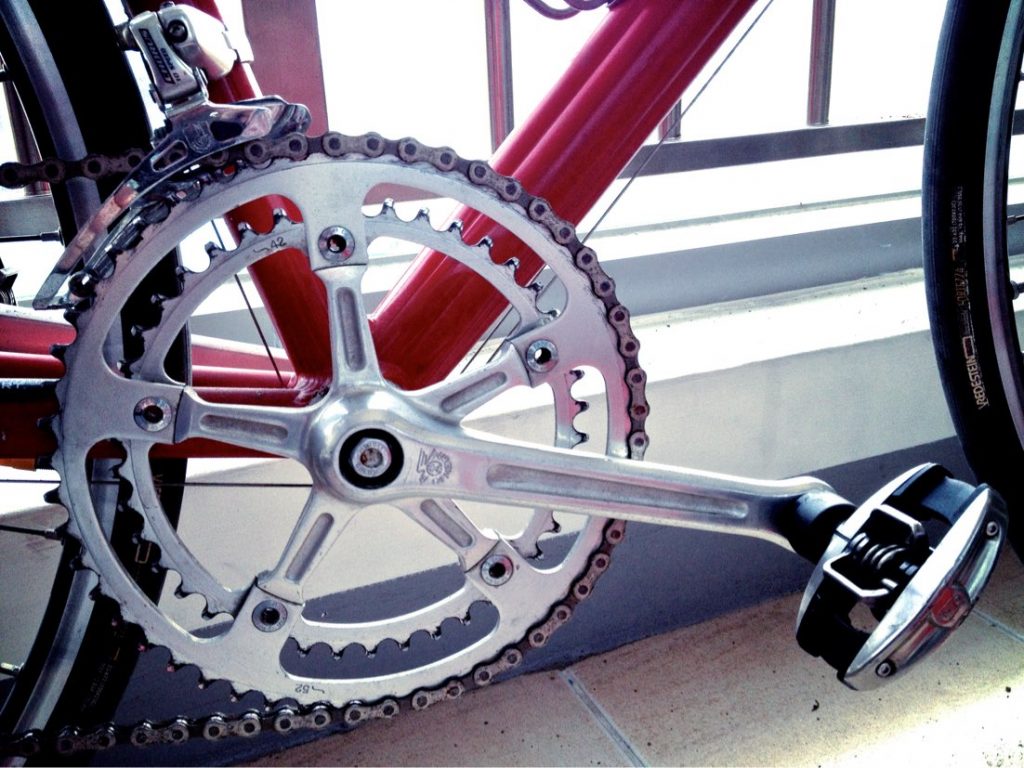
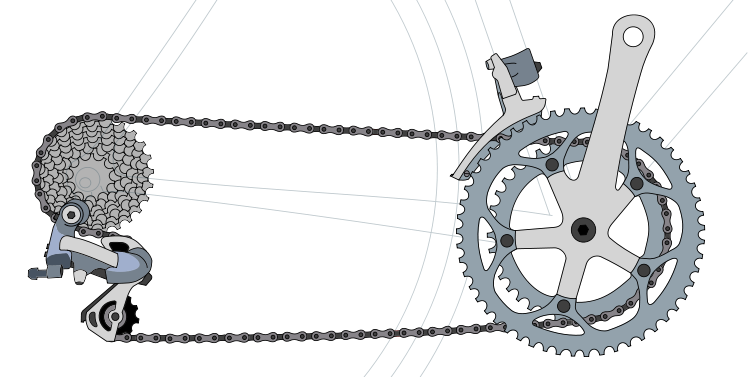
Systems thinking is a way of visualising these complex interactions. In ESS we use system models and system thinking to help understand both ecological and social systems and how they interact.
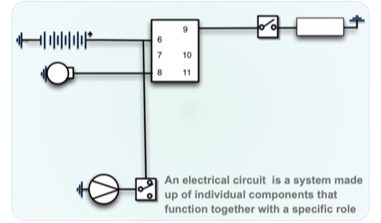
These interactions within a system produce emergent properties – the properties only exist because of the interactions within the system. Electrical and electronic components are an easy way to understand this.
Each component has a specific function but as a whole system a new property is produced. In this case, the components create an amplifier.
Systems thinking is a Holistic approach to visualising the world.
The Oxford dictionary defines Holistic as:
characterized by the belief that the parts of something are interconnected and can be explained only by reference to the whole.
System Diagrams
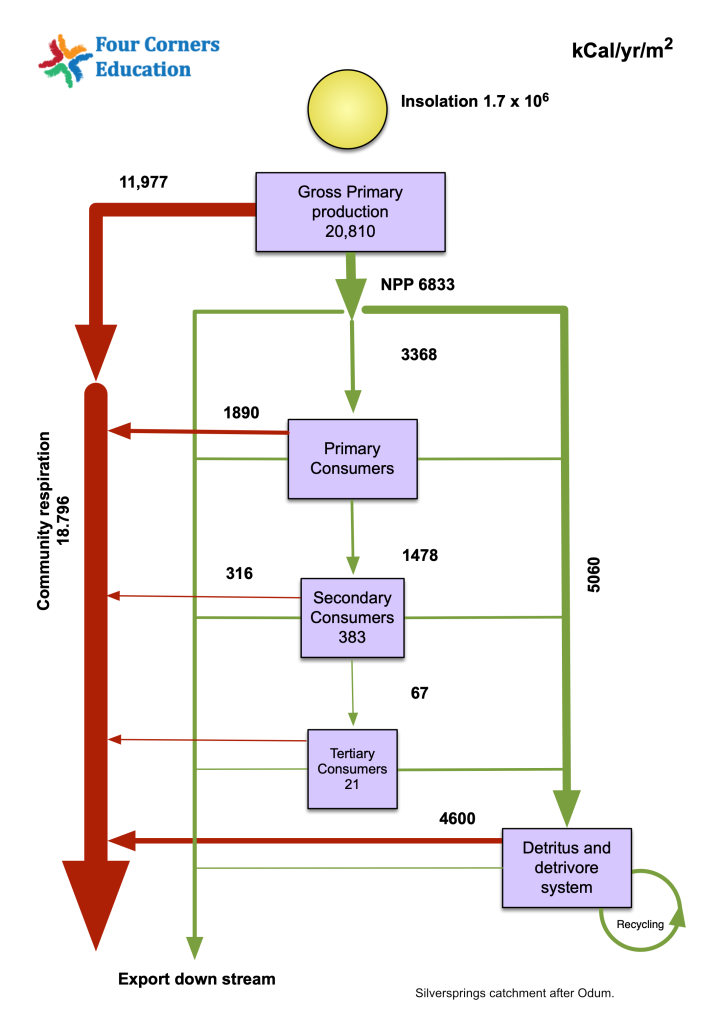
In many fields of research and study such as ecology, engineering, geography and sociology systems diagrams are used to represent the components and interactions of the whole system.
In ecology, this diagram is a famous representation of the flows of energy in the Silver Springs catchment, Florida, by Howard T. Odum which was made in the 1950s.
As with most System diagrams boxes represent Storage in the system and arrows represent flows, usually of Energy or Matter, but in a sociological system diagram the boxes could represent the storage of knowledge or culture and arrows the flow of ideas.
In this diagram the width of the arrows also represents the size of the flows.
Flows can be outputs in one part of the system becoming inputs into another part of the system

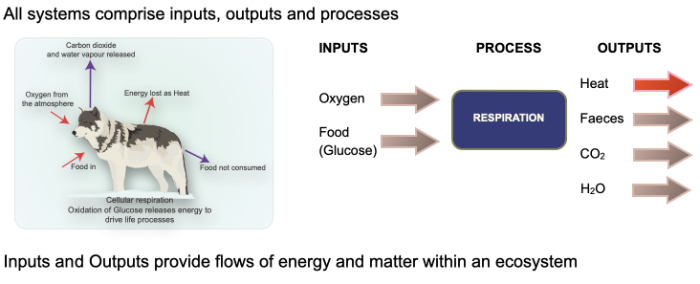
The diagram below represents the inputs and outputs that occur in every living organism during respiration. The organism itself is a storage of energy and matter and processes within the cells transform both to other forms of energy and matter.
Transfers and Transformations
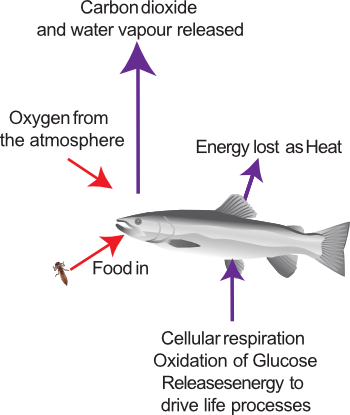
Flows are the result of processes in a system which either transfer energy and matter or transform energy and matter (in sociological systems we can think of this in different ways). A river transfers sediment from one part of the system to another, but the fish in the river may transform energy stored in the organisms it eats into heat that is released as part of respiration during work and also transforms some of the biomass of its prey into Carbon dioxide during respiration. Both are systems, but one is a component within the other system. Both have very different emergent properties depending at the level we examine them.
Making System Diagrams
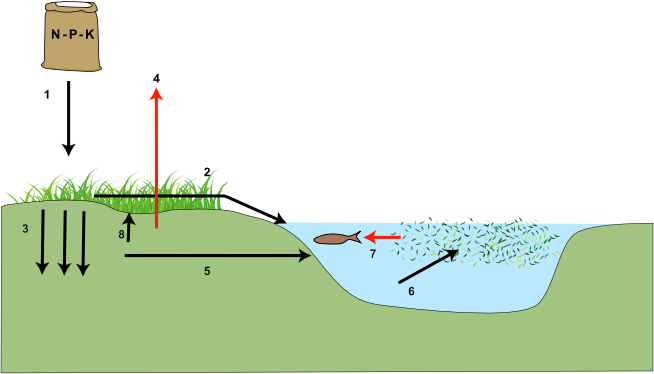
Following the illustration of the fate of nitrates found in chemical fertilisers below, create your own systems diagram, outlining, inputs, outputs, stores, transfers and transformations.
- Fertiliser containing nitrates is applied dry to the land
- Excess nitrate runs into a nearby pond following rain
- Nitrates enter the soil in solution
- Nitrates are lost from the soil during denitrification by bacteria as Nitrous oxide
- Nitrates enter the pond through soil water
- Nitrates in the pond water are taken up by aquatic plants and used to make proteins
- Fish eat some of the aquatic plants
- Plants take up nitrates from soil solution through their roots and use them to make proteins