
Guiding Question
How do different perspectives develop?
1.1.1 A perspective is how a particular situation is viewed and understood by an individual. It is based on a mix of personal and collective assumptions, values and beliefs.
1.1.2. Perspectives are informed and justified by sociocultural norms, scientific understandings, laws, religion, economic conditions, local and global events, and lived experience, among other factors.
1.1.3 Values are qualities or principles that people feel have worth and importance in life.
1.1.4 The values that underpin our perspectives can be seen in our communication and actions with the wider community. The values held by organizations can be seen through advertisements, media, policies and actions.
What stance do we take?
How we view the world and reality, is shaped by many things, but each of us has a perspective on the world. What we believe about the world.
Thought point:
Greta Thunberg, do you see her as a hero or a villain?
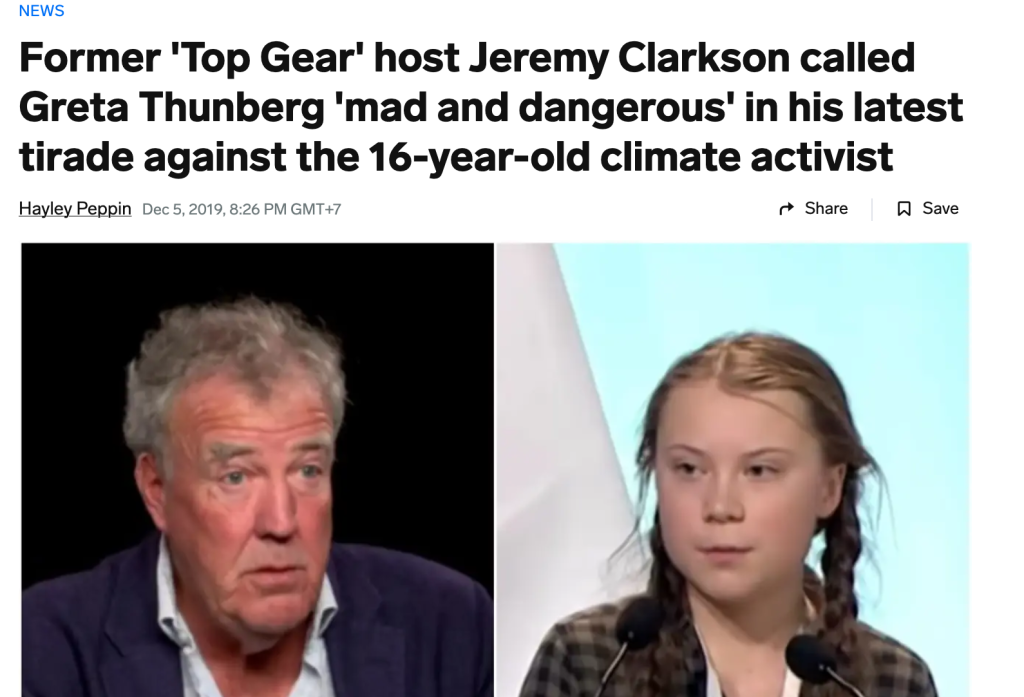
Peppin, H. (2019) Jeremy Clarkson Calls Greta Thunberg ‘Mad and Dangerous’, Business Insider. Available at: https://www.businessinsider.com/jeremy-clarkson-calls-greta-thunberg-mad-and-dangerous-2019-12
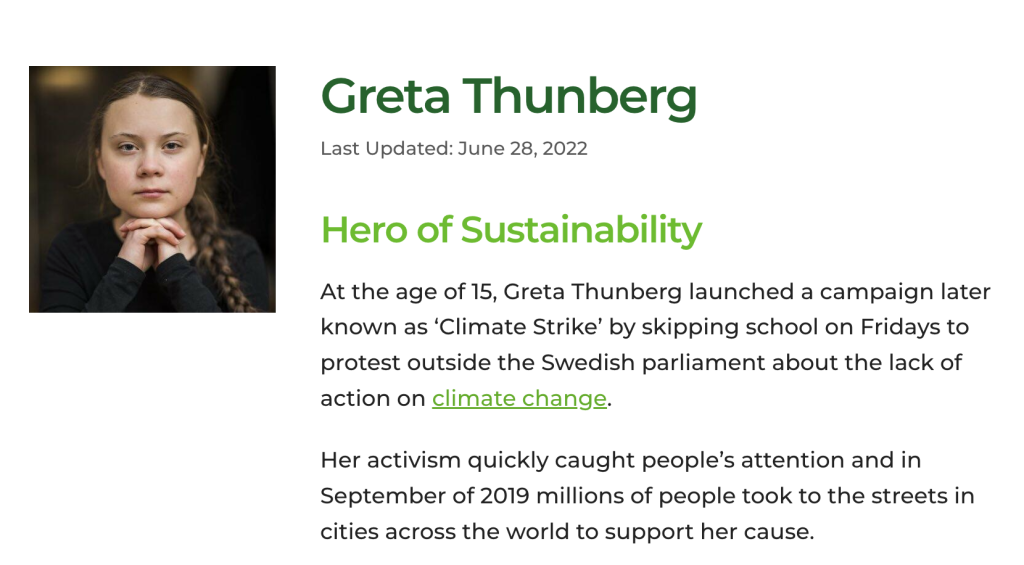
Econation (2022) Greta Thunberg: Hero of Sustainability and Climate Change, Econation. Available at: https://econation.one/blog/greta-thunberg/
Which of these two Headlines do you most agree with? But more importantly why?
What assumptions do you make about Greta Thunberg and each article?
Your answers to these questions are part of your perspective on the issue of whether Great Thunberg is a Hero or Villain.
They influence your thoughts, positions, choices and actions on a range of issues.
What might affect these people’s perspectives?

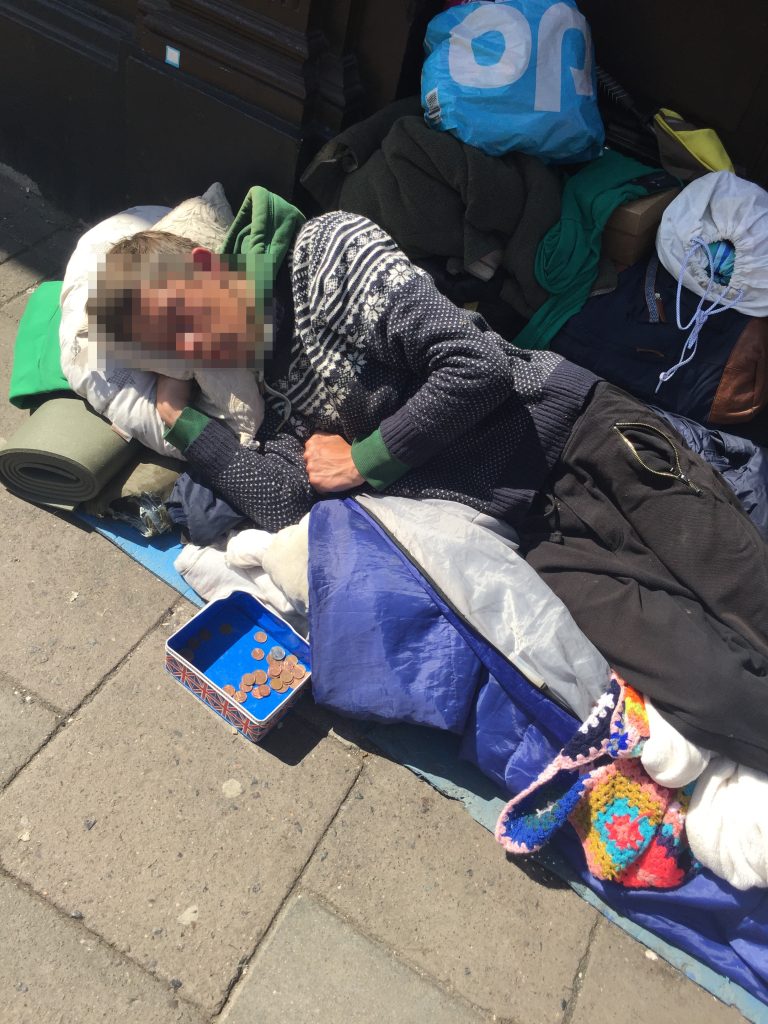

How do you think they might view the world?
Values and Beliefs.
Our perspectives are informed by values and beliefs. Below is a link to a survey that was designed to ask Grade 4-7 students about their Environmental World View. The questions are all about what we value and what we believe. Complete the survey – it’s anonymous – add your results to all the other results in the table below the link. The original research article is here: Torkar, G. et al. (2020) ‘Assessing Children’s Environmental Worldviews and Concerns’, Center for Educational Policy Studies Journal [Preprint]. Available at: https://doi.org/10.26529/cepsj.793.

Make sure you refresh the page to see your results added
What informs our Beliefs and Values
Various inputs inform our perspective on any issue. These include sociocultural norms, scientific understandings, laws, religion, economic conditions, local and global events, and lived experience.
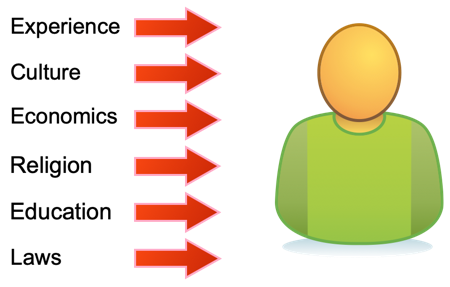
These inputs influence the position that we take on any issue. Throughout the ESS course, we are mainly concerned with how our perspective shapes our position and response to Environmental and Social issues.
Our values are qualities or principles that people feel have worth and importance in life. They are individual but may also be shared with others around us and shaped by them.
A value example
What values shape us: One issue two different perspectives
Adapted from: Brown A: Extended Essay – Can the reasons for drilling in ANWR Section 1002 outweigh the costs?, 2010, unpublished
In 2005 the US government under George W Bush voted to allow oil drilling in Alaska’s Arctic National Wildlife Refuge.
The proposed drilling areas are:
Home to the indigenous Gwich’in people and the inhabitants of the small city of Kaktovik
Supports both Polar Bears (Ursus maritimus)and Porcupine Caribou (Rangifer tarandus granti)
The Gwich’in people depend on caribou as their main food source
The area is estimated to have as much as 13,000,000 barrels of oil.
The majority of people in the Kaktovik depend on the oil industry for a living.
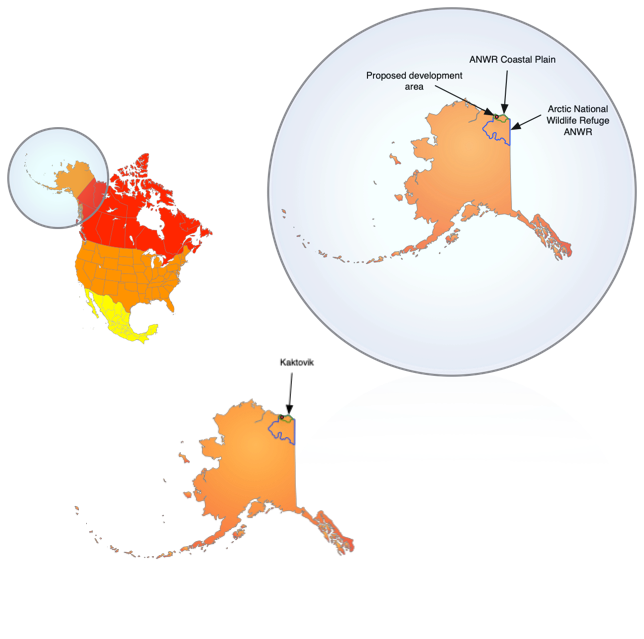
The Gwich’in people opposed an expansion of oil exploration and the inhabitants of Kaktovik mainly supported the expansion.

- Identify 3 inputs you think might inform each perspective.
- Explain why you think these may be important to each community.
- Suggest what values have the strongest influence on each community.
- Which perspective would you take? Justify your answer in terms of what you view as the important values in this example, from your own perspective.
How are Values communicated and how do they affect our Actions?

Just Stop Oil protestors demonstrating in the Uk in 2022. From https://www.bigissue.com/news/activism/just-stop-oil/
The Just Stop Oil protesters in the image also hold a set of values about oil exploration and use.
Think about how those values and beliefs have become action. What have the protestors done to communicate their perspective?
What do you think of the methods they have employed?
The two links below are to two very news stories about Just Stop Oil protests at spring events. Read both articles and look for words and phrases in them linked to the values and beliefs of each reporter.
The first article is from the Guardian newspaper and seems to support the protestors. You will find it HERE
The second is from the Daily Mail newspaper and takes a different viewpoint. You will find it HERE
We are surrounded by Influence
Throughout the 1970s, 80s and 90s Organisations such as PETA, Lynx and Greenpeace vocally organized protests against the use of fur in fashion. These were highly effective and used high-quality “advertising” materials as well as protest “stunts” to get their message across, with very famous name photographers and fashion models involved. The image below is from 1980s as part of a Greenpeace campaign.
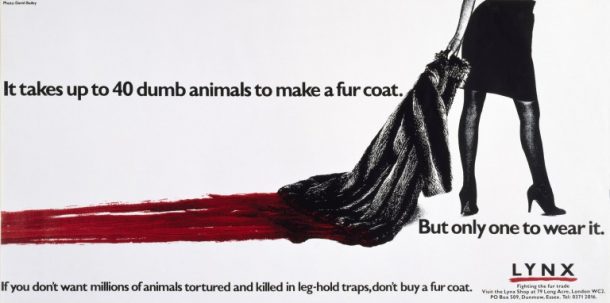
‘It takes up to 40 dumb animals’ poster, Jeremy Pemberton (b. 1948, art director), Alan Page (b. 1951, copywriter) and David Bailey (b.1938, photographer) for Lynx, Originally issued by Greenpeace, 1984, Britain, 1986–7. V&A: E.3041-1991 © Victoria and Albert Museum, London.
The advert was included in an exhibition at the Victoria and Albert Museum, London, in 2021 – It is seen as that important.
- Suggest why the campaign was very effective.
- What values and beliefs do you think the campaign is trying to portray? Explain your answer.
Nearer to Home
Organizations can portray their values through not only adverts but also policies and actions.
Thoughts and find out moment:
What values does the IB portray? How does it portray them? What actions are part of that inside your school? Does your school have ways of communicating its values? What are they? Where are they communicated? Does your school have an environmental policy?
Quick Overview Notes


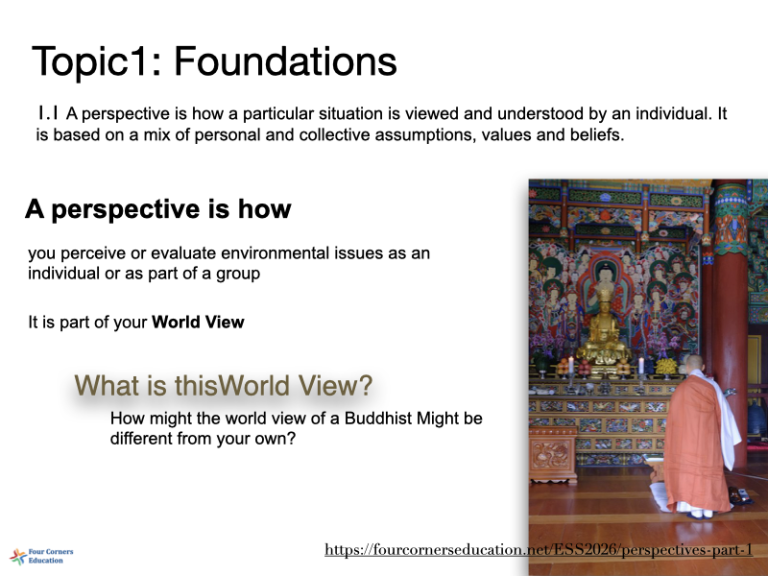


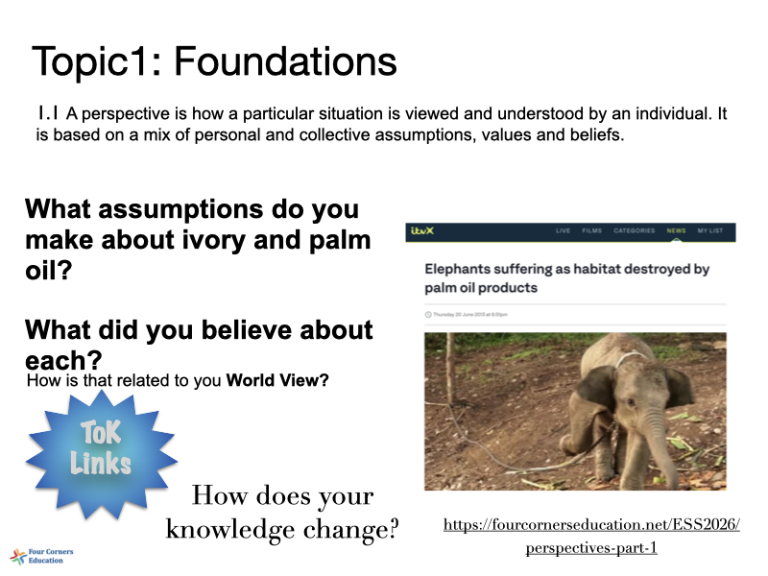


Original pdf notes can be found HERE
In the next section, we will look at how this concept of perspective can be used to investigate environmental values and beliefs, we will also examine some of the historic foundations of the modern Environmental movement – Greenpeace included.