
The Goal of soil conservation is to prevent the two main types of soil degradation: Erosion (physical loss of topsoil) and Toxification/Depletion (loss of chemical fertility). This can be thought of in terms of 3 connected processes:
- Reducing / Stopping Erosion
- Improving soil fertility
- Management practices
Physical/Mechanical Barriers (Stopping Erosion)
These methods focus on slowing down the movement of water and wind across the land.

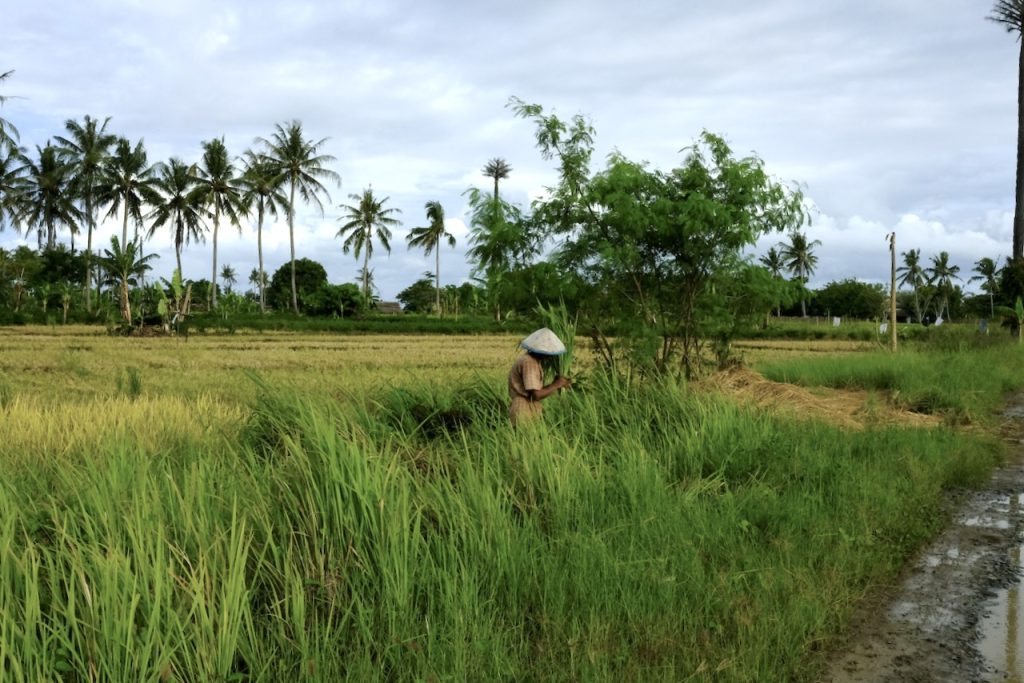
Palm trees and field hedges help protect the soil in rice paddy, West Java, Indonesia.
- Reducing Erosion by Water:
- Terracing: on steep hills creates a series of “steps.” This reduces the speed and impact of surface runoff, allowing water to soak in to the soil rather than wash soil away.
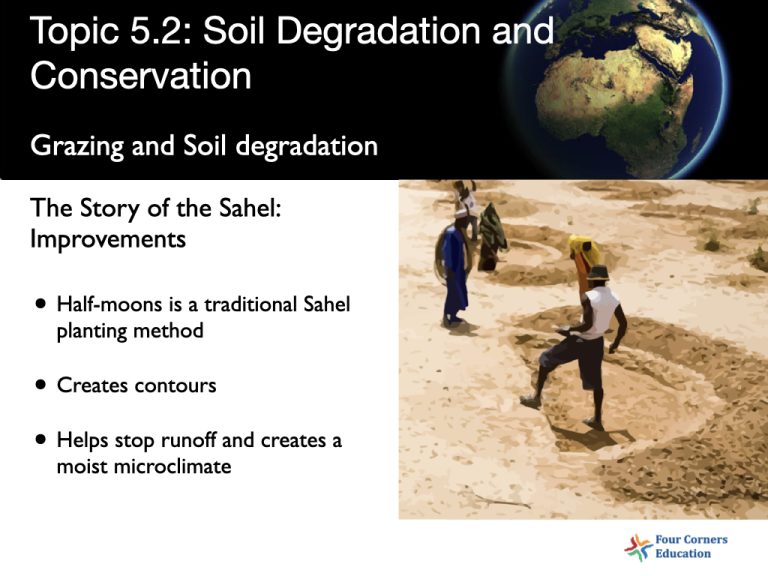
- Contour Plowing: across the slope following its countours. The ridges created act as mini-dams slowing water movement.
- Bunding: Creates raised embankments of soil or stone to channel water and prevent “gullying” where soil is washed away to create mini canyons in the soil
- Drainage Systems: using pipes or ditches to lead excess water away safely so the soil doesn’t become waterlogged.
- Against Wind Erosion:
- Windbreaks (Shelterbelts): are created by planting rows of trees or hedges at the edges of fields. This creates a “dead zone” of calm air, preventing the wind from lifting the dry topsoil or damaging crops. Hedges also provide shelter for grazing animals.
2. Biological Techniques (Improving Fertility)
These methods use organic matter to improve soil structure and nutrient content.
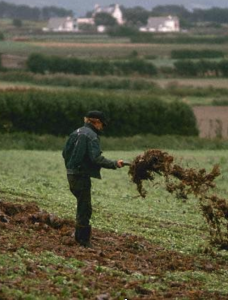
- Soil Conditioners:
- Lime: is added to acidic soils to increase pH, which makes nutrients more easily “available” to plants.
- Organic Materials: is added Compost or Green Manure (crops like clover grown specifically to be plowed back into the earth).
- The “Cover Crop” Multi-tool:
- Cover crops stay in the ground during the off-season to:
- Physically hold soil in place with roots (anti-erosion).
- Shield the surface from wind/rain.
- When plowed under, they act as “green compost” to return Nitrogen to the soil.
- Cover crops stay in the ground during the off-season to:
3. Cultivation & Management Practices
Changing how we farm to ensure the soil has time to recover.
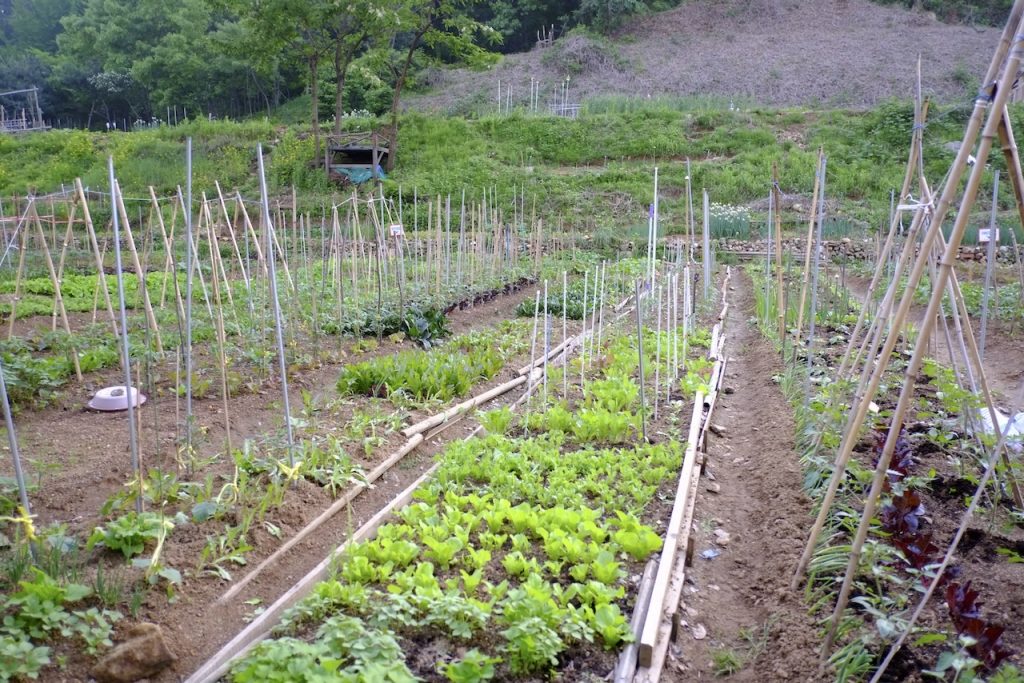
- Reduction in the use of Marginal land: the extensive use of synthetic fertilisers has allowed “marginal” land to be used for farming where traditional practices did not provide enough productivity. Returning these marginal lands or avoiding there use creates areas of biodiversity and conservation.
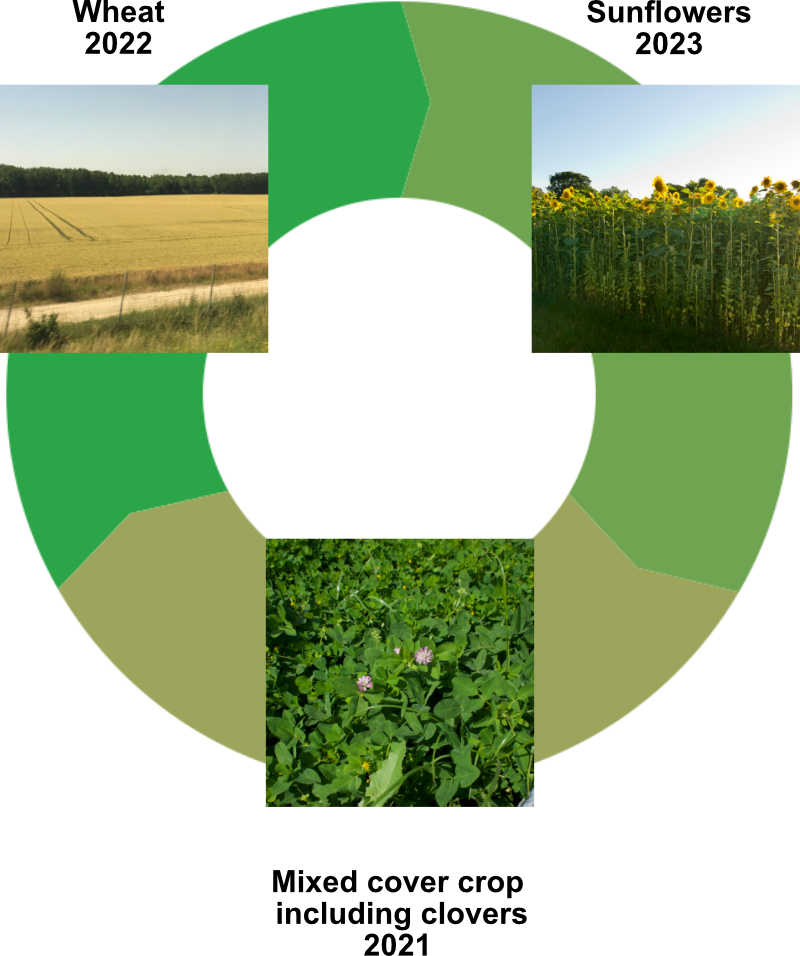
- Crop Rotation: Growing different crops in a sequence (e.g., Wheat, Sunflower, Fallow). This prevents specific nutrients from being totally exhausted and breaks pest cycles.
- Reduced Tillage (No-Till Farming): Leaving the remains of the previous crop on the ground and planting through it. This keeps the soil “skin” intact and prevents carbon from escaping into the atmosphere.
- Agroforestry: Planting crops amongst trees. The trees provide shade, wind protection, and deep roots that bring nutrients to the surface.
- Strip Cultivation: Planting different crops in alternating strips (e.g., a strip of grass next to a strip of corn). The grass catches any soil that washes off the corn strip.
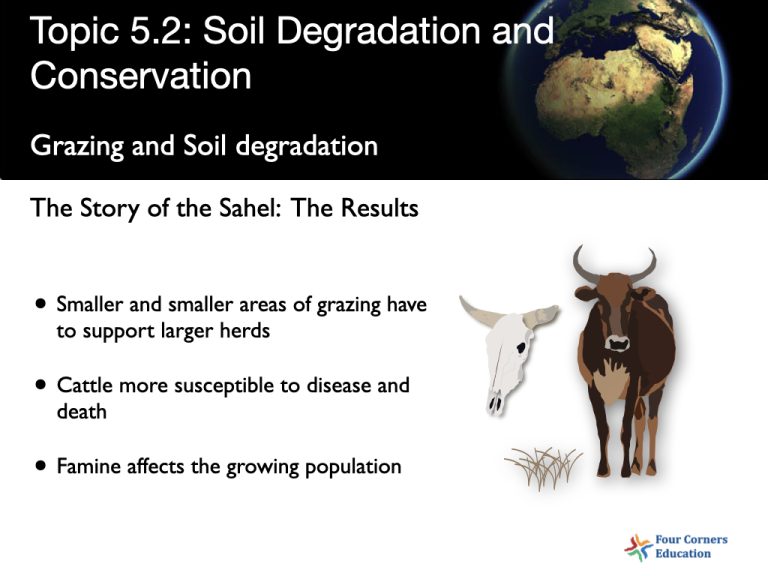
- Avoiding Overgrazing: Managing livestock so they don’t eat the vegetation down to the bare dirt, which is a primary cause of desertification.
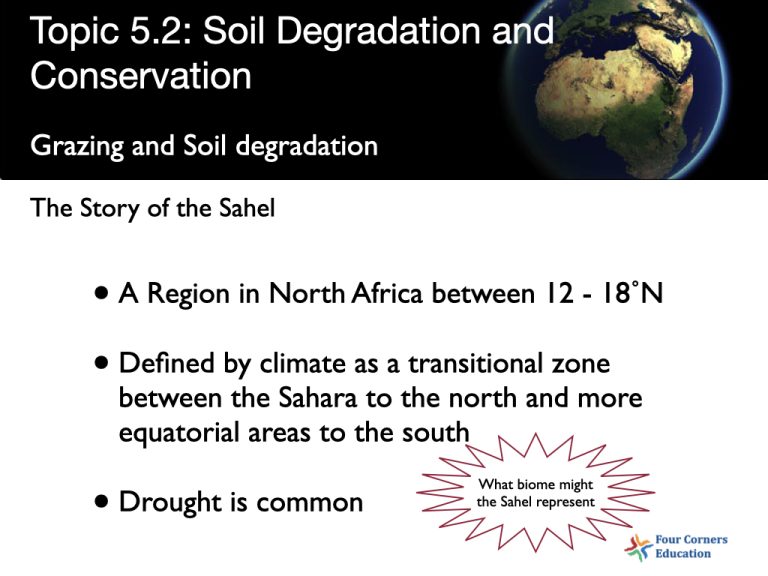
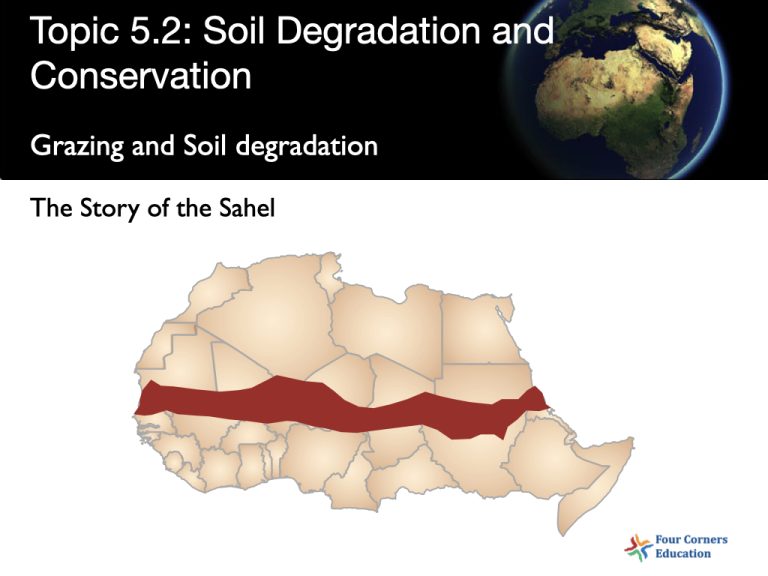
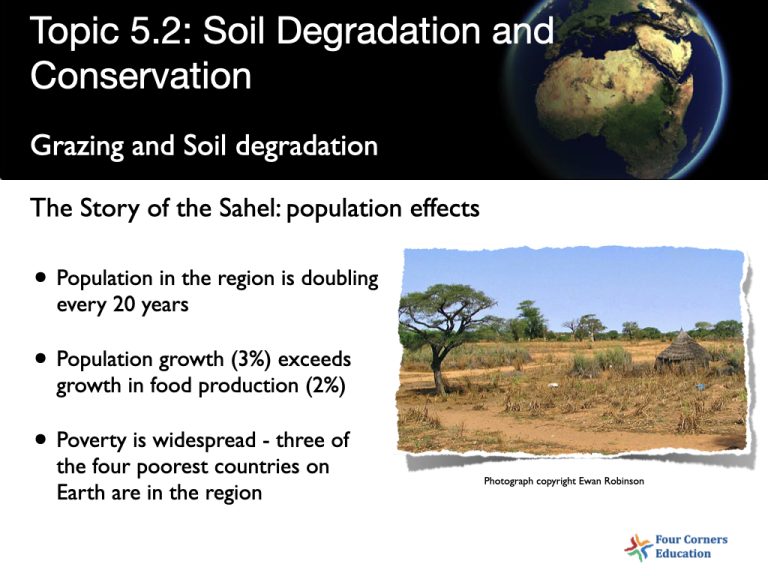
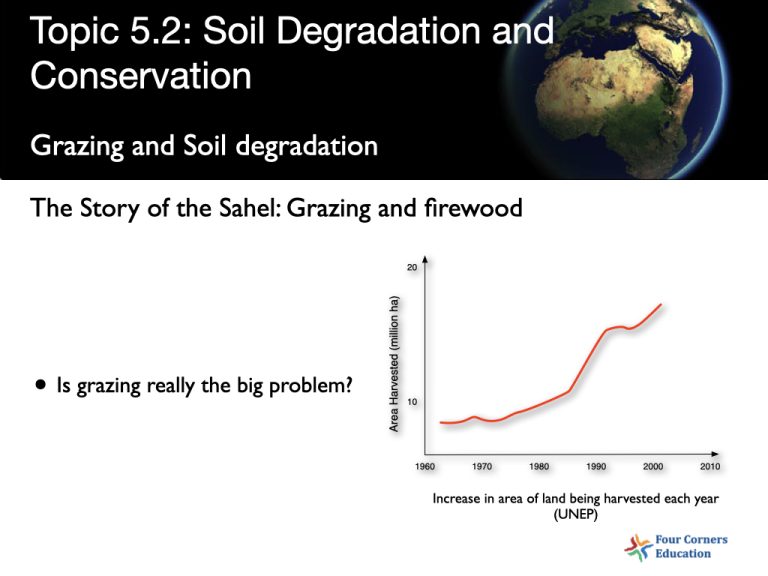
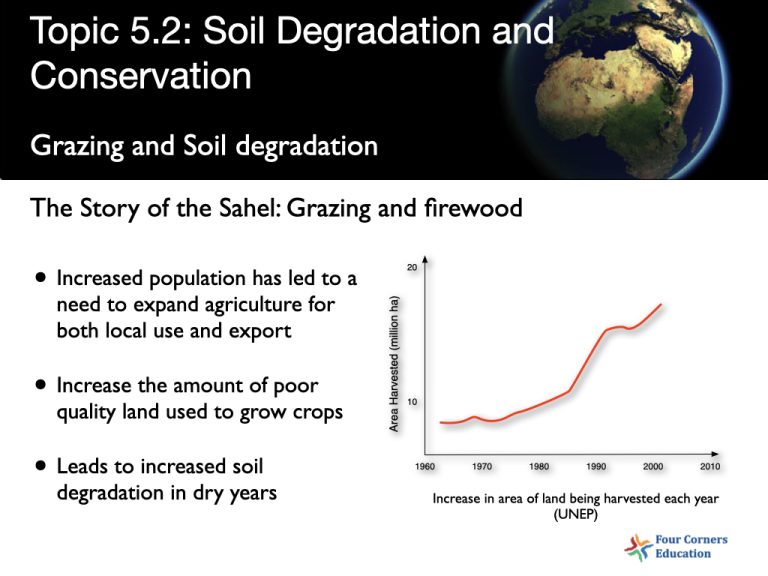
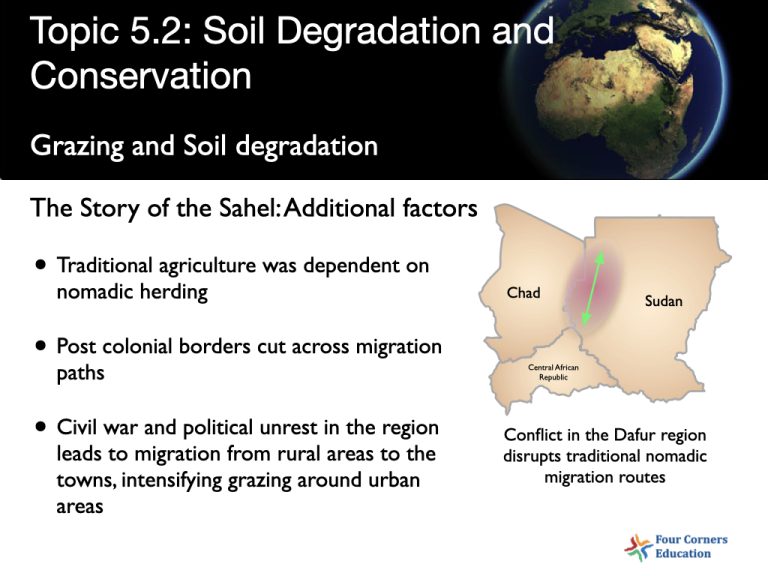
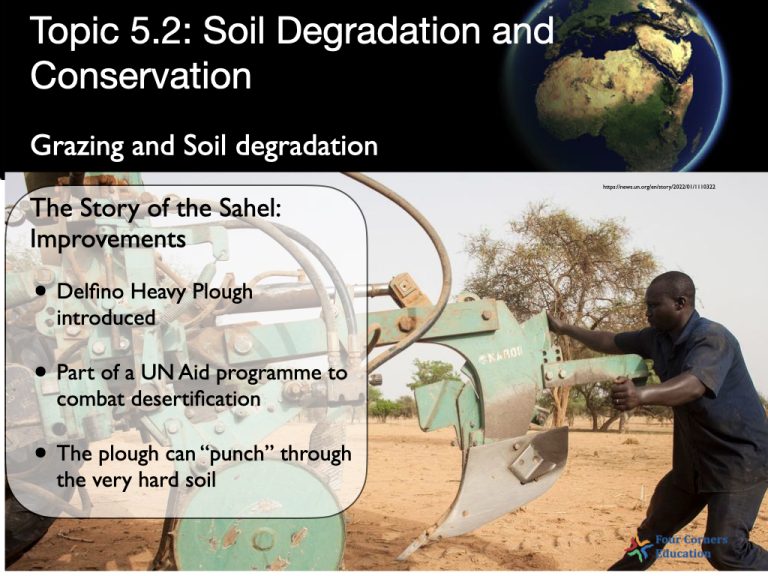
Framing and desertification: The Sahel Story





Benefits of Soil Conservation
| Type of Benefit | Examples |
| Environmental | Increased biodiversity, carbon sequestration, reduced sedimentation in rivers. |
| Economic | Long-term higher yields, reduced spending on expensive synthetic fertilizers. |
| Sociocultural | Food security for future generations, maintaining traditional farming landscapes. |
Comparison of Soil Management: Sahel vs. European Beef and Dairy
| Feature | Nomadic Pastoralism (Sahel) | Intensive Beef & Dairy (Europe) |
| Primary Soil Threat | Desertification and wind erosion due to aridity. | Compaction and nutrient leaching due to heavy rain/machinery. |
| Soil Conditioners | Organic Manure / Humanure: Adds nutrients and improves water-holding capacity. | Lime (Calcium Carbonate): Increases pH to counteract acidity from rain/fertilizers. |
| Cultivation Technique 1 | Agroforestry: Planting trees (e.g., Acacia) to act as windbreaks and anchor soil. | Herbal Leys: Planting deep-rooted mixed grasses to improve soil aeration and structure. |
| Cultivation Technique 2 | Nomadic Grazing: Frequent movement of herds to prevent overgrazing and soil exposure. | Reduced Tillage: Avoiding plowing to keep the soil “skin” intact and prevent carbon loss. |
| Sustainability Level | High (if population density is low), but threatened by climate change. | Moderate (high yields but high fossil fuel/chemical dependency). |