
Population dynamics organisms interact, shape the entire ecosystem. Below we will consider six different interactions—herbivory, predation, parasitism, mutualism, disease, and competition—each having ecological, behavioural, and evolutionary consequences.
Herbivory
Herbivory can be defined as the consumption of plant material by plant eating animals – herbivores.
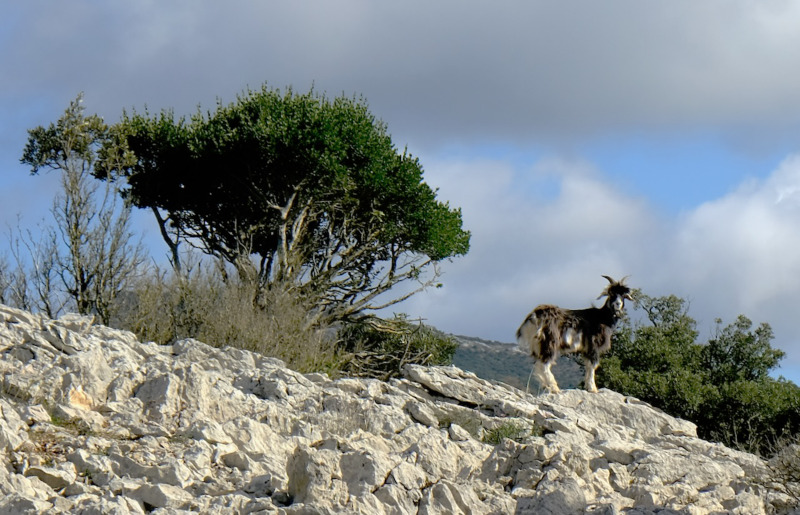
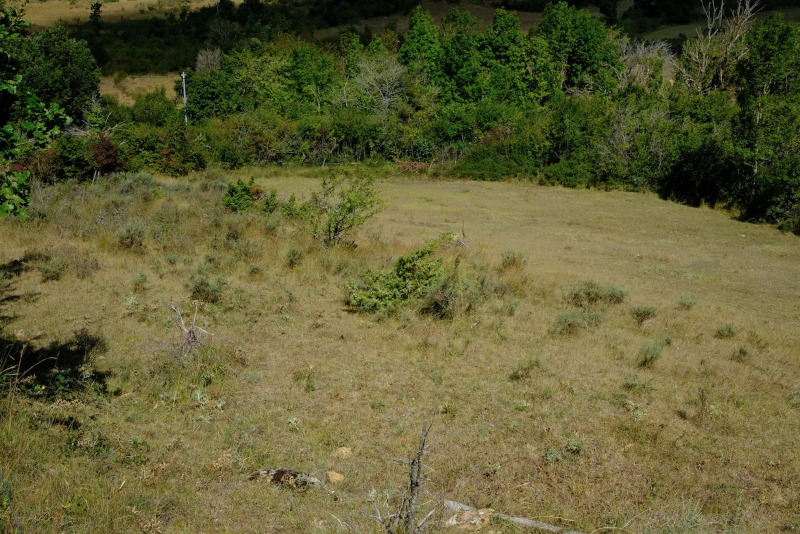
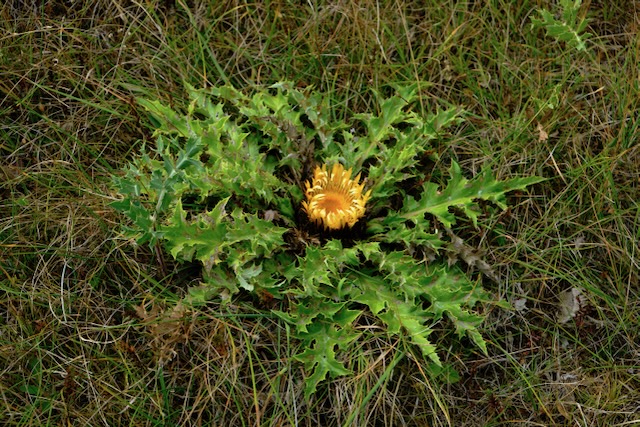
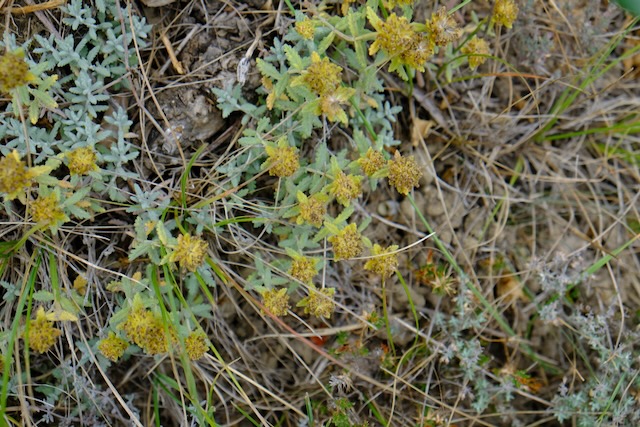
Feral goats in the foothills of the Pyrenees consume vegetation both in forests and natural grasslands. Their ability to consume almost all plant material, significantly impact plant communities, thereby influencing the distribution and abundance of plant species. This interaction exerts selective pressures on plants, driving the evolution of traits such as physical and chemical defences. Plants which can survive heavy browsing by Feral goats in these grassland areas tend to have either spines or toxic chemicals in their their cells. In response, herbivores may adapt to changes in plant defences, leading to ongoing evolutionary dynamics. Goats have much thicker skin on their tongue and mouth compared to other grazing and browsing herbivores so have evolved to cope with all but the toughest spines.
Predation

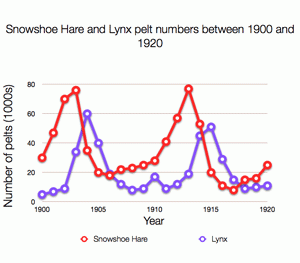
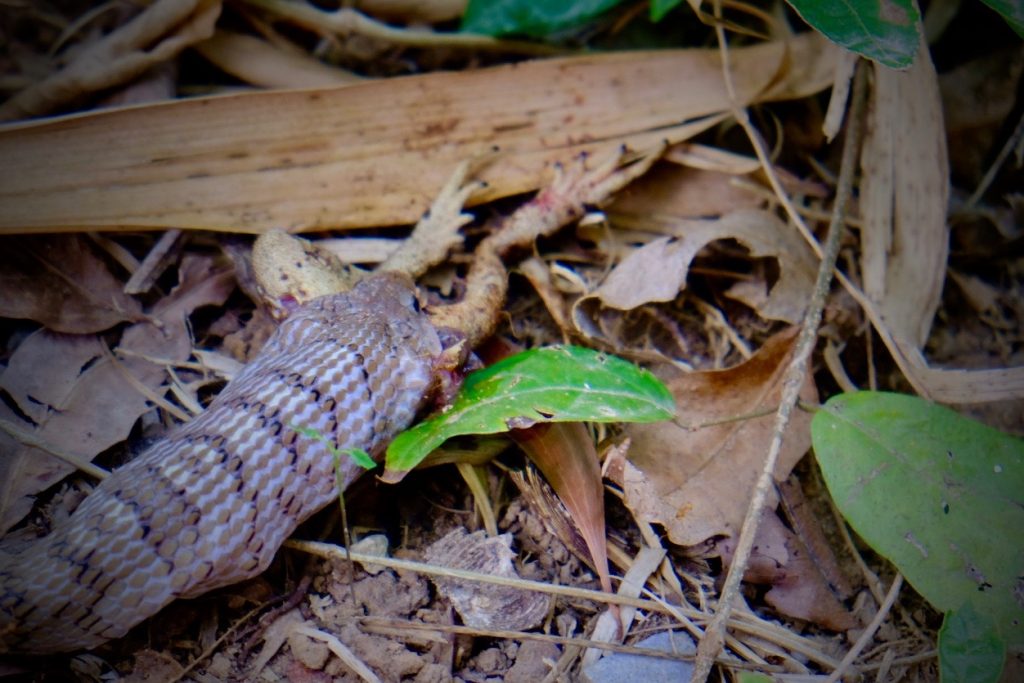
Predation involves the consumption of one organism (predator) by another (prey). For instance, think of Lynx hunting Snow Shoe Hares. This interaction regulates prey populations (however in this case the amount of vegetation available for the Snow shoe Hare regulates its population as well through herbivory dynamics). Predator behaviours and prey adaptations are also shared by the interaction. Over time, prey species may evolve strategies like camouflage or defensive behaviours, while predators may refine their hunting tactics. These dynamics continually shape the structure and function of ecosystems.
This evolutionary arms race input has been called an ecological arms race1. A simple example of this is in a hunt chase scenario: The prey that survive tend to be the slightly faster ones so they pass on their genes to the next generation, but the predators that hunt the best and survive tend to be those that are a little bit faster than the rest of the prey population so they pass on their genes. This continues with predator and prey populations gettinga. little bit faster all the time. Its much more complicated than that but its a very good simple descriptive model to help you think about it.
Parasitism
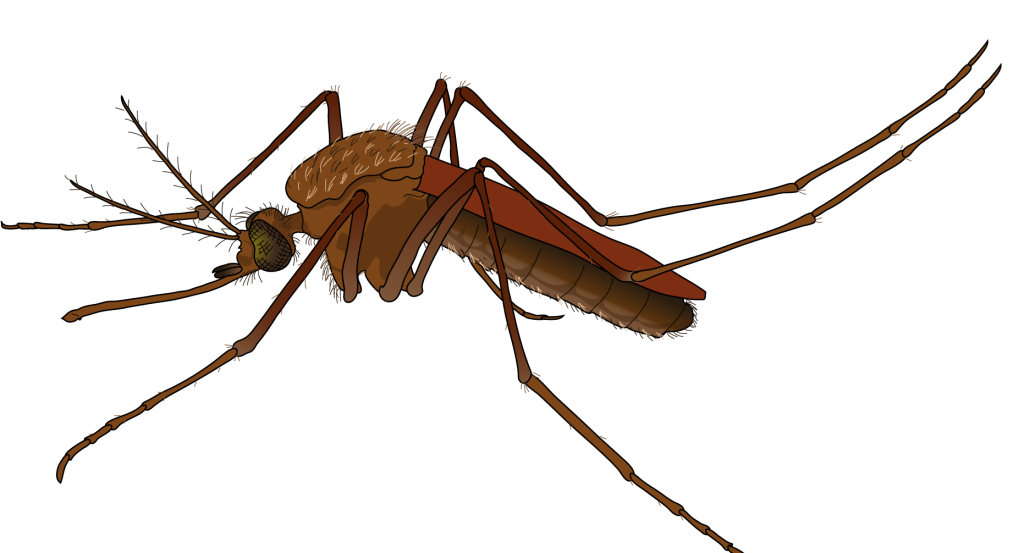
Parasites depend on hosts for nourishment and reproduction, often causing harm in the process. The malaria parasite transmitted by mosquitoes to humans is a classic example of parasitism. This interaction influences host population dynamics and behaviours.
Host species may evolve resistance to parasites, while parasites may evolve mechanisms to evade host defences. In the 1940s it was discovered that Sickle Cell Anemia caused by a genetic mutation in populations in Africa gave provided protection from malaria.

Mutualism
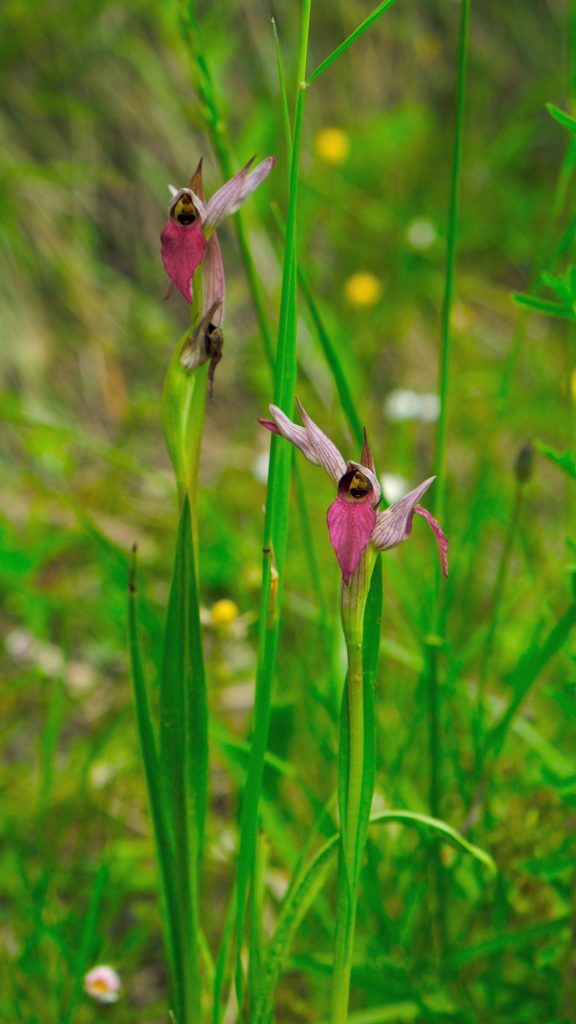
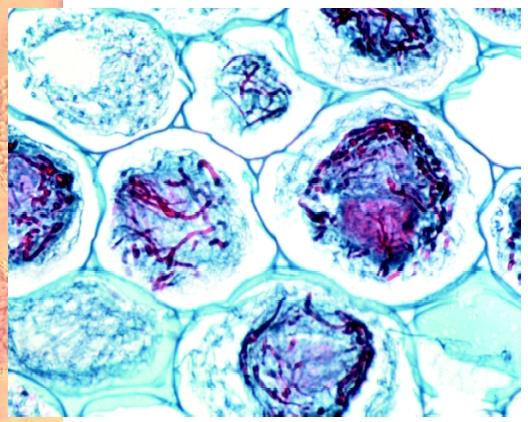
Mutualistic relationships benefit both interacting species. Orchid species are entirely dependent on a relationship with mutualistic fungi for germination and early development. The fungi which are found in root nodules on provide the plant with both carbon and nitrogen from the soil whilst the orchid provides the fungi with a source of sugars from photosynthesis2. The relationship is so tightly dependent that orchid species will not germinate from seed unless its particular mutualistic fungus is present in the soil.
Disease

Diseases significantly influences population dynamics. Disease outbreaks can lead to mortality, reduced reproductive success, and behavioural changes, thereby impacting population size and structure.
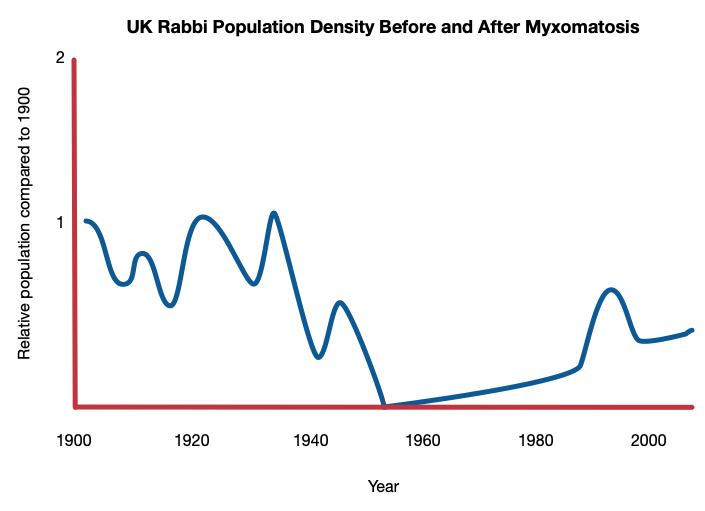
In 1953 Myxomatosis a viral disease which affects rabbits broke out for the first time rapidly killing many million.
The model below shows how the disease affected the UK Rabbit population
References
- Scott, T. J., & Queller, D. C. (2019). Long-term evolutionary conflict, Sisyphean arms races, and power in Fisher’s geometric model. Ecology and evolution, 9(19), 11243–11253. https://doi.org/10.1002/ece3.5625 ↩︎
- Cameron, D.D., Leake, J.R. and Read, D.J. (2006), Mutualistic mycorrhiza in orchids: evidence from plant–fungus carbon and nitrogen transfers in the green-leaved terrestrial orchid Goodyera repens. New Phytologist, 171: 405-416. https://doi.org/10.1111/j.1469-8137.2006.01767.x ↩︎