
The Niche Concept
All species interact with their biotic and abiotic environment and something called its Niche is described by these interactions.
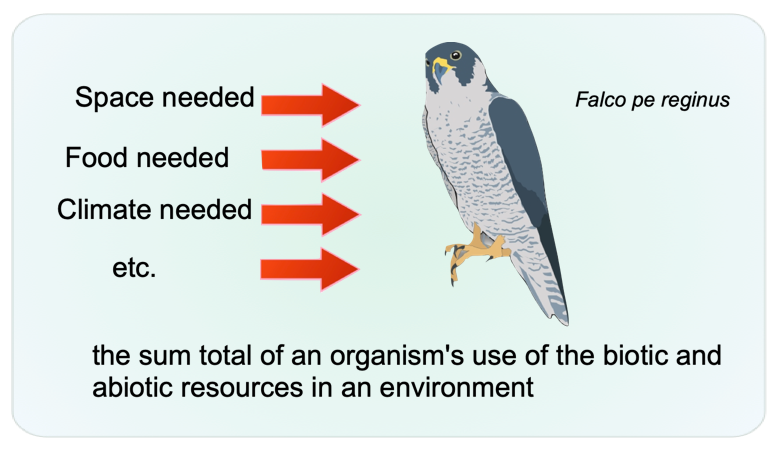
We can define the concept of Niche as:
A species’ share of a habitat and the resources in it.
An organism’s ecological niche depends not only on where it lives but on what it does as well as what is done to it by other organism’s
VERY IMPORTANT IDEA
Thinking Task
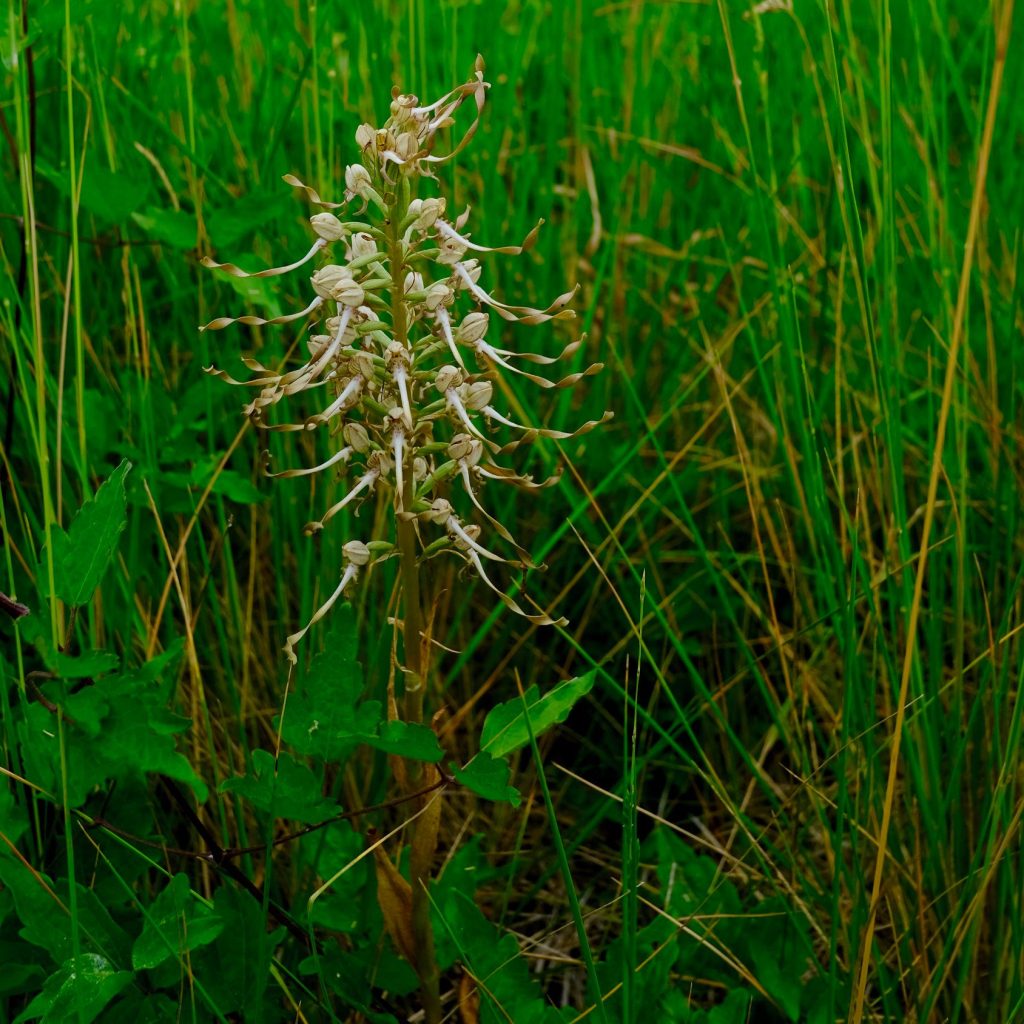
Suggest all of the niche resources that the Lizard orchid may need from the available biotic and abiotic environments:
Space to grow, Food and climatic conditions are some but what others might it need?
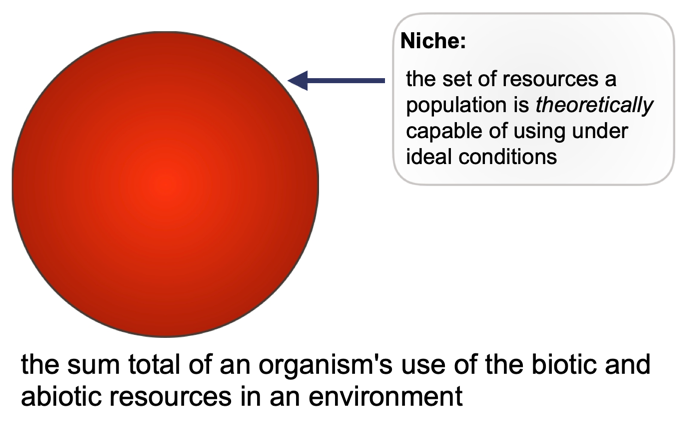
A way to think about a species or populations niche is to imaging it as a ball of a certain size and inside that ball are all the conditions the species needs to be successful under Ideal conditions.
Again another important idea – ideal conditions rarely exist in ecosystems, the niche that is available to the species is affected by its interactions with other species and by the abiotic conditions available.
Conditions which limit the niche
In the Canadian Rockies Wolves and Brown bears sometimes compete for the same food. This creates a niche overlap. However they do not compete for other resources so the effect of this competition on each species is only small.
However where wolves and bears have been attracted to urban areas the competition can increase and this limits the niche available to each species.
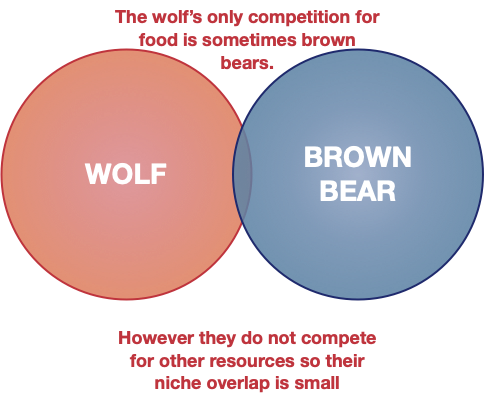
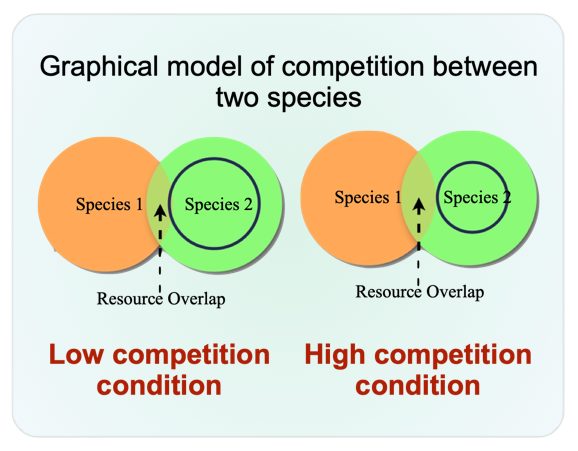
As competition increase between two species for the same niche resource the niche available to both decreases.
However if the the competition is too great between species ONE species will tend to outcompete the other.
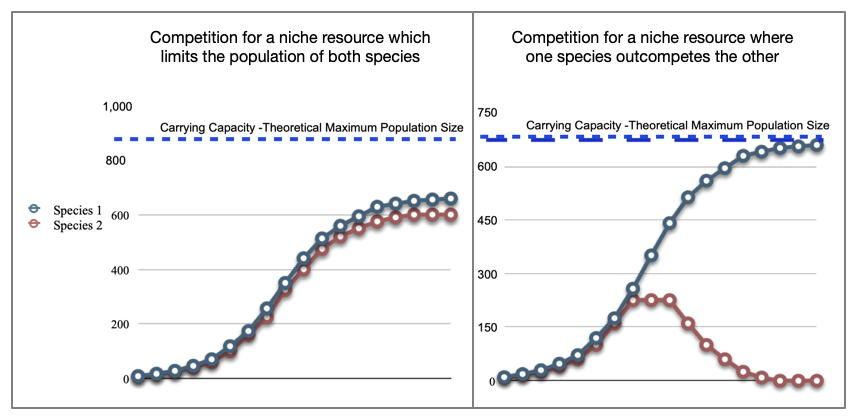
Interactions for biotic and abiotic resources which describe the niche, influence the growth, survival and reproduction of a population.
Avoiding niche overlap
Many species avoid niche overlap in various way. Zebra, Wildebeest and Thompson gazelle on the Serengeti savanna in Africa all eat the same grass however there migration cycles results in little competition between them. Take a look at the video to understand how this happens.