
Systems can be thought of as fitting into one of two types depending upon how they exchange matter and energy with its surroundings: Open and Closed
Open systems
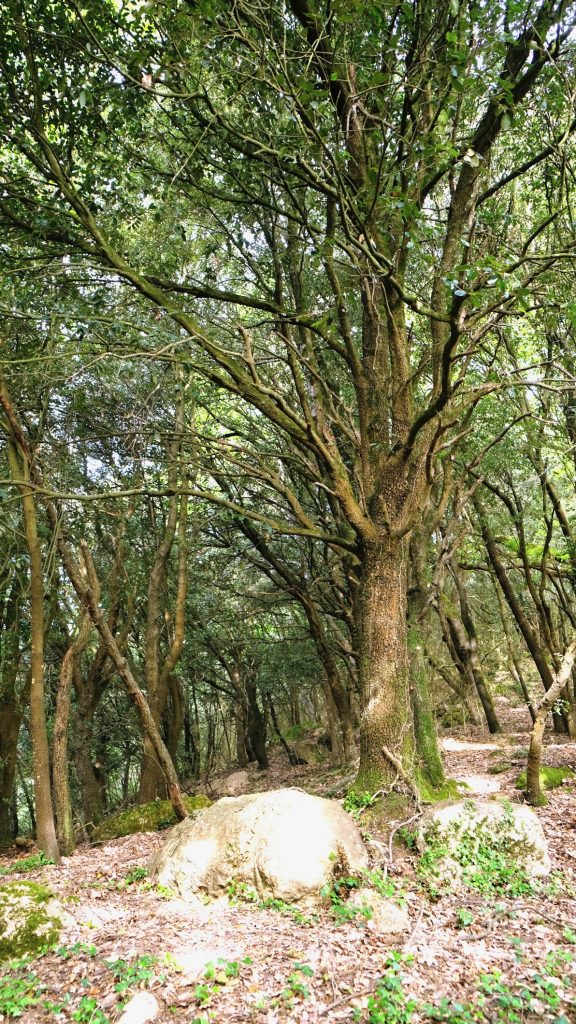
Open Systems exchange both energy and matter with surrounding systems. Most systems are open, including ecosystems. In forest ecosystems plants fix energy from light entering the system during photosynthesis. Nitrogen is fixed by soil bacteria. Herbivores that live within the forest canopy may graze in adjacent ecosystems such as a grassland, but when they return they enrich the soil with feces. After a forest fire top soil may be removed by wind and rain. Mineral nutrients are dissolved out of the soil and transported in ground water to streams and rivers.
Open system models can even be applied to the remotest oceanic island – energy and mater is exchanged with the atmosphere, surrounding oceans and even migratory birds.
It is important to remember that if we are thinking in the terms of systems, then each component of a system is surrounded by a larger environment. A single tree ( a system in its own right ) within a forest system exchanges energy and material with the surrounding forest
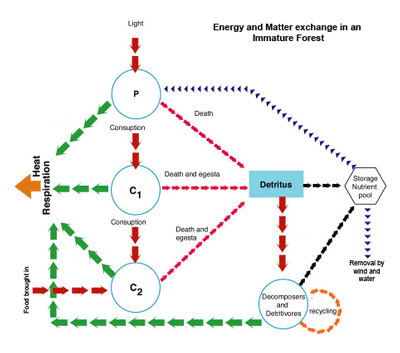
Below is a model of both energy and matter flow through a forest ecosystem. We can consider each part of the ecosystem as a separate open system on its own. Feeding exchanges matter between organisms which is converted to energy which my be released in work as heat or converted again to matter as carbon dioxide and exchanged with the atmospheric system. Death exchanges matter with the soil system.
Closed Systems: exchange energy but not matter.
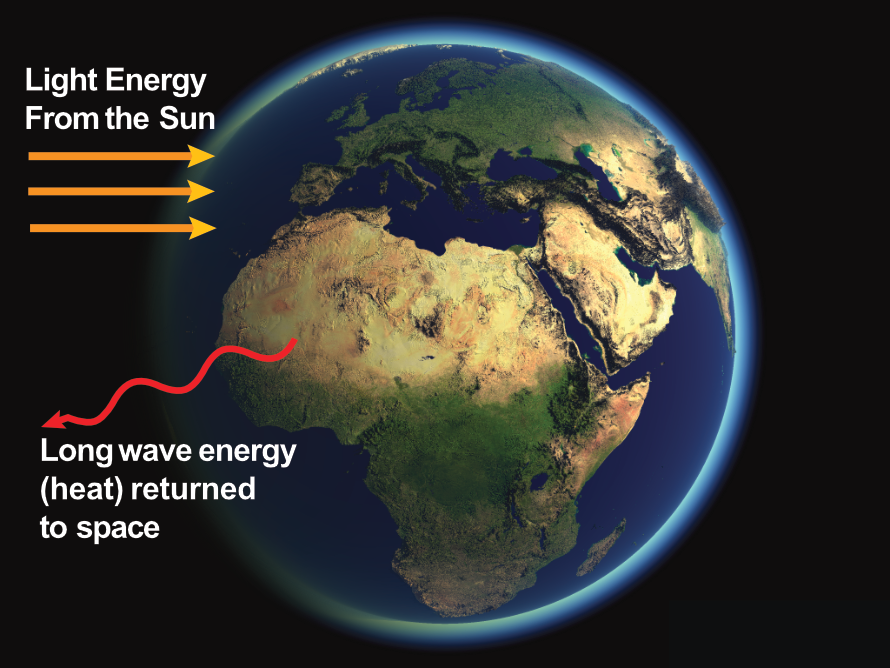
Closed systems are extremely rare in nature. No natural closed systems exist on Earth but the planet itself can be thought of as an “almost” closed system.
Light energy in large amounts enters the Earth’s system and some is eventually returned to space a long wave radiation (heat).
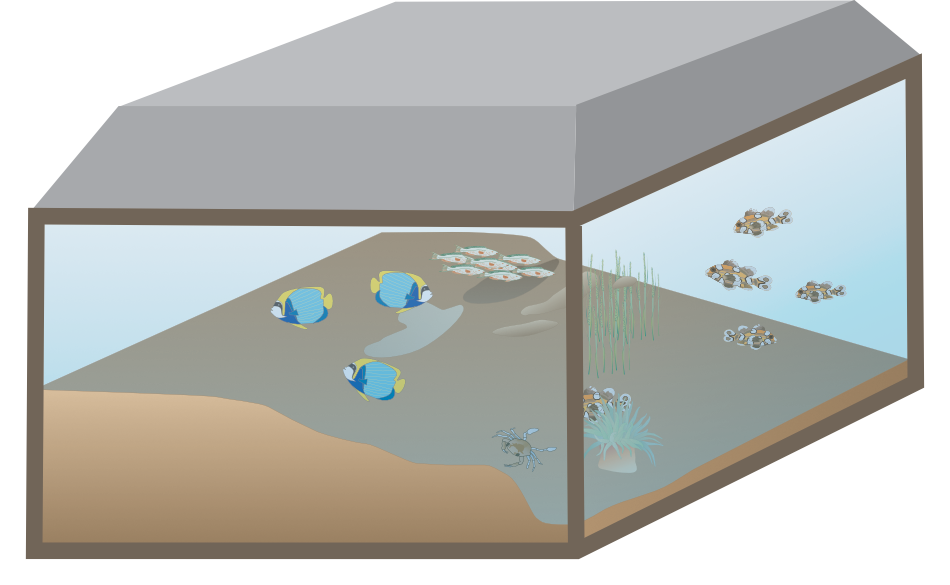
Experimentally it is possible to establish simulations of a closed system. The fish tank in the diagram approximates a closed system. However these simulations to be successful have to be self sustaining for everything except light energy. In reality this is very difficult to achieve. Small imbalances in the system, which we will look at later can push the entire system out of equilibrium.
Biosphere 2 – a problematic closed system attempt
Biosphere 2 was a human attempt to create a habitable Closed system on Earth.
Built in Arizona at the end of the 1980’s Biosphere 2 was intended to explore the use of closed biospheres in space colonisation.
Two major “missions” were conducted but both run into problems. The Biosphere never managed to produce enough food to adequately sustain the the participants, a problem that many smaller closed system simulations run into, and at times oxygen levels became dangerously low and needed augmenting.
Investigating Open and Closed Systems
Simulations of Open and Closed systems can make very nice subjects for Internal Assessment work. Usually they are set up as “bottle” biomes and there are many different designs which can be used. A lot of information about creating a “bottle biome” is available by searching the internet. The video below is a rather good explanation of the basics.