Growth

A population size can be thought of as a system. It has inputs which increase the size of the population and outputs which decrease the size of the populations:
Populations increase in size when the rate of Births and Immigration are greater than the rates of Death and Emigration.
They decrease when Death and Emigration are greater than Birth and Immigration.
This means that over time the numbers within a population change. Returning to the example of bacterial cells from the previous page bacterial cells, place them in a suitable supply of nutrients and then under a microscope cont the number of cells every hour we would find that there would be many more bacteria at the end of a 24 hour period than at the start.
It is possible to model this growth as a mathematical equation:

Population growth = change in population number / change in time
or dN/dt
Where dN = change in numbers and dt = change in time
This equation can also be written using the symbol delta to represent time:
How do populations grow
Use the walk through below to understand how populations size changes as an output of a system because of changes to the inputs. If you are viewing on a hand held device you can see the same page full screen HERE
Exponential Growth – the J curve
Thinking about the bacteria above, if I started out with one bacteria (bacteria reproduce asexually so a population can start with one)and if the bacteria reproduced one after 5 minutes and then died every, after 30 minutes I would have 64 bacteria – the population size would double every 5 minutes. This means that the each time the population changes it increases the amount of population change next time. More simply the rate of population growth increases as the population grows or exponential growth. This can be expressed as a rate equation – another model.
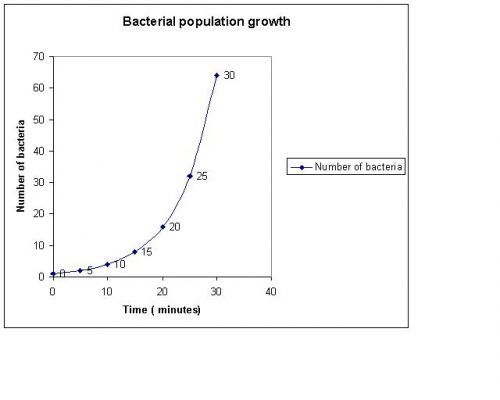

This produces a J shaped curve. As long as their is a plentiful supply of the resources that the organism needs. in the case of bacteria: sugars, moisture and warm the population would keep growing indefinitely.
Obviously in nature this does not happen. Darwin in Origin of Species (p117 -119) recognises that this would be an absurd proposition.
“There is no exception to the rule that every organic being increases at so high a rate, that if not destroyed, the earth would soon be covered by the progeny of a single pair. Even slow-breeding man has doubled in twenty-five years, and at this rate, in a few thousand years, there would literally not be standing room for his progeny. Linnaeus has calculated that if an annual plant produced only two seeds – and there is no plant so unproductive as this – and their seedlings next year produced two, and so on, then in twenty years there would be a million plants. The elephant is reckoned to be the slowest breeder of all known animals, and I have taken some pains to estimate its probable minimum rate of natural increase: it will be under the mark to assume that it breeds when thirty years old, and goes on breeding till ninety years old, bringing forth three pairs of young in this interval; if this be so, at the end of the fifth century there would be alive fifteen million elephants, descended from the first pair.”
So what stops the planet being knee deep in elephant dung?
Limited resources
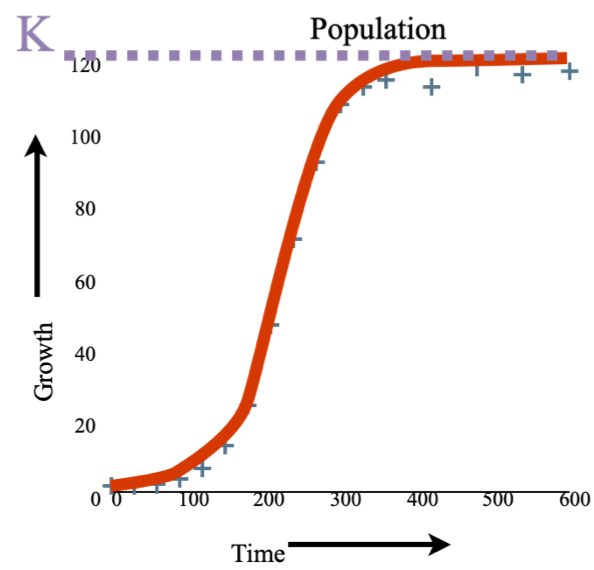
All resources in an ecosystem are limited. there is only so much food, only so much space, only so many mates even. The results of these ecological limits or ECOLOGICAL RESISTANCE is that no population can keep growing forever. There is a ceiling limit that each ecosystem sets. This limit set by the resources of the ecosystem (the available niche resource) is the CARRYING CAPACITY, confusingly given the symbol K in ecology.
Population growth – phases of growth
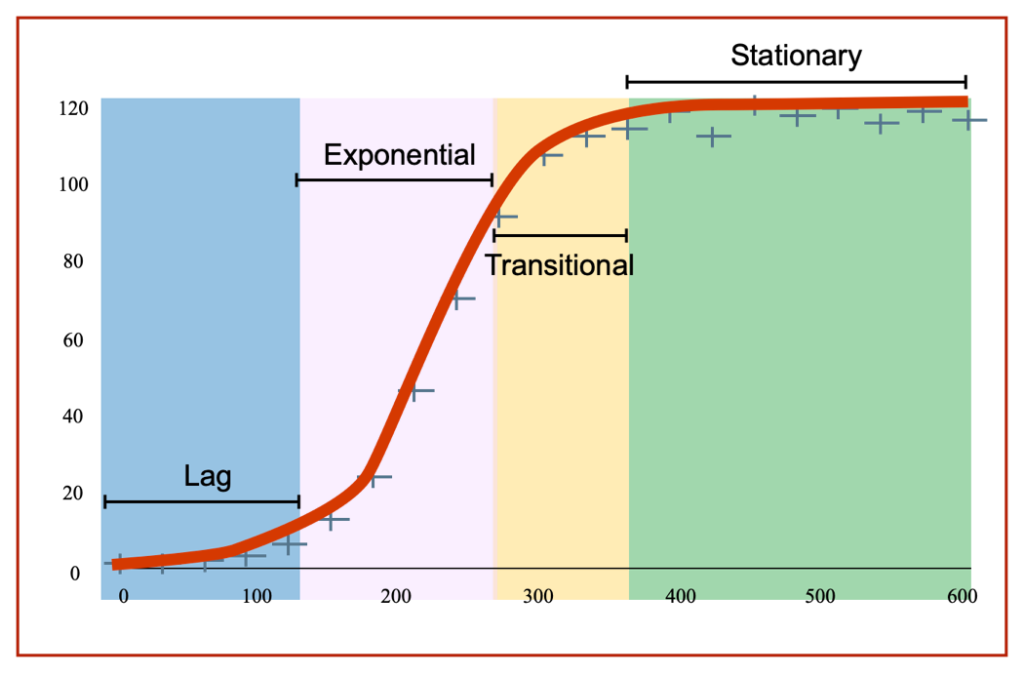
Lag phase: population grows slowly (environmental adaption). Population is small so can not full exploit the resources available in the environment
Exponential or Log phase: Population grows rapidly exploiting a plentiful resource supply (maximal growth. Resources are being exploited rapidly
Transitional phase: population growths slows as resources start to be come limiting
Stationary phase: Population growth reaches a plateau ( growth slows )- the maximum population size under the environmental conditions – Population is using all of the available resources with no additional resources for continued population growth
Limits of population growth
In natural habitats the resources available are not infinite, so as the population grows it starts to experience environmental resistance. Lack of resources become limiting factors that have an effect on continued population growth. The result is that population growth slows down.
Eventually the population reaches a maximum number that the limited resources in the habitat can support (carrying capacity). When carrying capacity is reached the number of gains in population size (birth and immigration) equals the number of losses (death and emigration) and the population size stabilises.
These limits are set by the environment and include both abiotic and biotic factors. Competition for limiting recourse include:
- Suitable space to breed – such as nest sites, sites for seed germination
- Access to mates
- Access to food
- Climatic conditions
- Soil conditions
Example of limiting conditions in animal and plant communities
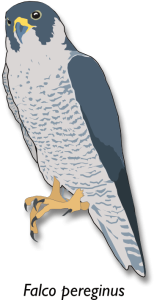
Until the 1940’s the British population of Peregrine falcons had remained fairly constant – about 820 breeding pairs
This was limited by available nest sites (same places each year). The average brood size was about 2.5 fledged young each summer
Come the next breeding season the population was back to about 820 pairs.
Competition for suitable nesting sites regulated the population of Peregrine falcons
Limestone ecosystems make interesting population study sites. Where they are exposed to rain a broken habitat with gaps between limestone rocks known as limestone pavement can develop. It is a bare dry hostile environment except in the gaps between rocks where a small amount of soil develops and a small populations of alkaline tolerant species develop. Each population is limited by both available space and the ability to grow in an alkaline environment that experiences rapid drying out in warm seasons.

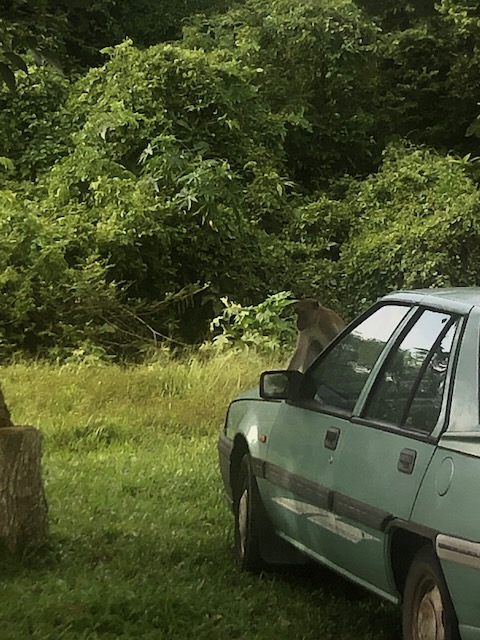
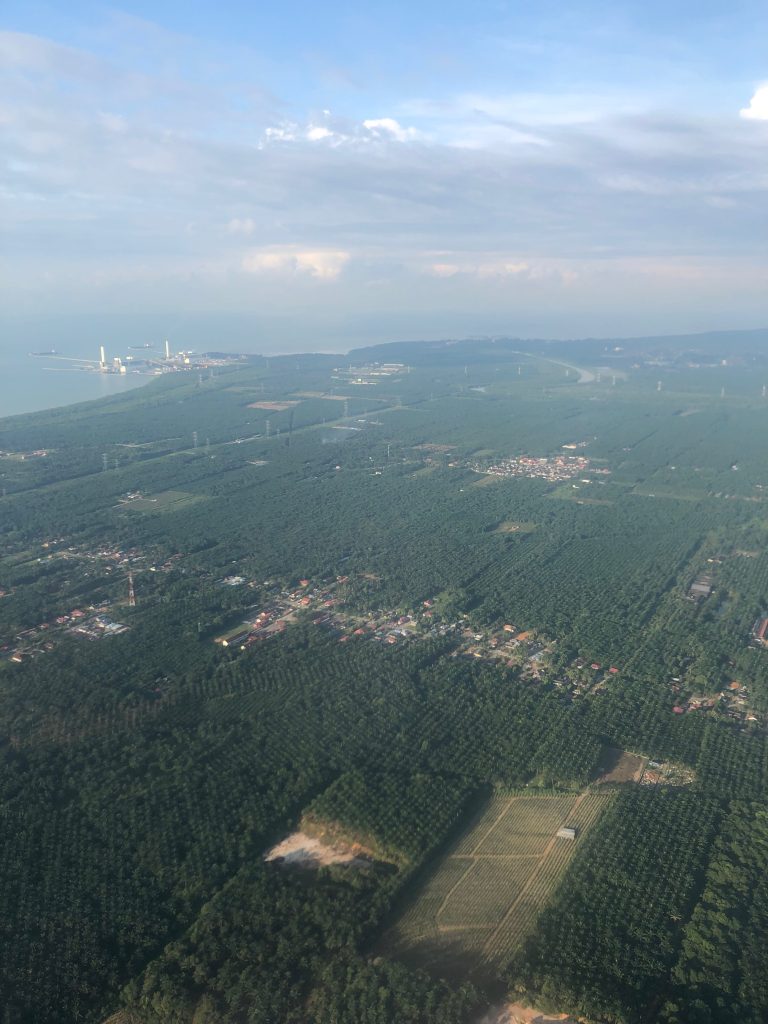
Removal of Rainforest in Malaysia for both Urban growth and Palm Oil plantation has pushed many Monkey species into direct contact with humans.
Whilst some adapt and feed in parks and from road side rubbish, many more die as individual troops are pushed into smaller areas where they directly compete with each other for food.